HVAC maintenance checklist for service technicians
A preventive maintenance checklist for residential and light commercial HVAC visits: cooling, heating, airflow, electrical and safety checks, and what to record for the customer.
By Primemgr TeamHow we research and check this
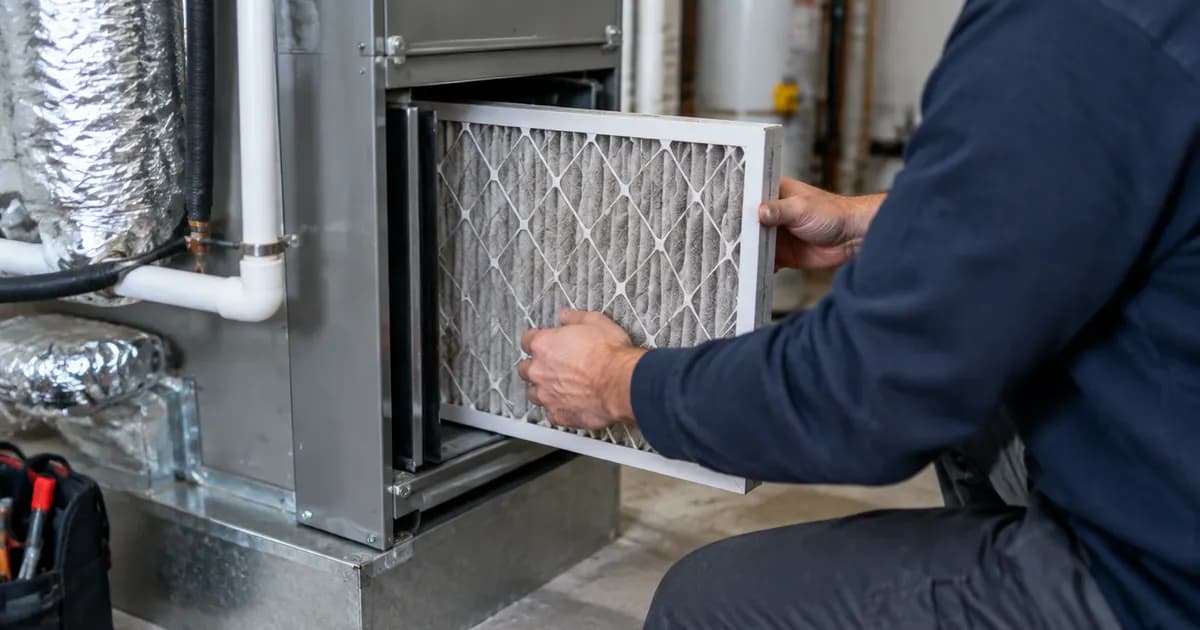
An HVAC maintenance visit checks the controls, cleans or replaces filters, inspects and cleans the coils and drains, checks electrical connections and motors, measures the system’s performance, and records the results for the customer. Most residential systems are serviced once a year, and many technicians service cooling before summer and heating before winter. Always follow the equipment manufacturer’s service instructions; they take precedence over any general checklist.
ENERGY STAR publishes a maintenance checklist for homeowners that covers the same ground: thermostat settings, electrical connections, lubrication, the condensate drain and system controls. The list below is organised for a technician’s visit.
Before starting
- Ask the customer about any symptoms: noise, smells, uneven temperatures, short cycling, water leaks.
- Record the make, model, serial number, refrigerant type and install date if not already on file.
- Isolate power before opening panels.
Controls and thermostat
- Check thermostat settings, schedule and batteries.
- Confirm the system starts, runs and stops correctly in each mode.
- Check safety controls and cut-outs operate.
Airflow
- Clean or replace filters; record the filter size.
- Inspect and clean the evaporator coil where accessible.
- Inspect the blower: clean the wheel, check the motor and belt where fitted.
- Check supply and return grilles are clear.
- Check accessible ductwork for obvious leaks or disconnections.
Cooling
- Clean the condenser coil and clear debris around the outdoor unit.
- Check the fan motor and blade.
- Measure and record operating pressures and temperatures against the manufacturer’s figures.
- Check for signs of refrigerant leaks. Record any refrigerant added and the amount.
- Clear and flush the condensate drain and check the tray.
Handling refrigerant usually requires a licence or certification. In the US, technicians who work on equipment that could release refrigerant must hold EPA Section 608 certification; other countries have their own schemes.
Heating
- For heat pumps: check reversing valve operation and defrost cycle.
- For gas appliances: inspect the burner, ignition, flame and flue, and test for gas leaks and carbon monoxide as your licence and local regulations require.
- Check heat exchangers for cracks or corrosion where visible.
Electrical
- Tighten connections and check for heat damage.
- Measure motor current against the nameplate.
- Test capacitors and contactors.
What to record and give the customer
Record | Why |
|---|---|
Readings: pressures, temperatures, current | A baseline to compare next year |
Filter size and whether replaced | The next visit brings the right one |
Refrigerant added, type and amount | A leak shows up as a pattern; often a legal record too |
Faults found and fault codes | The basis for a repair quote |
Photos of anything needing attention | Explains the quote to the customer |
Next service due date | Books the next visit |
Running maintenance visits in Primemgr
The Primemgr HVAC pack records system type, refrigerant, filter size, refrigerant added and fault codes on each job, with a service checklist filled in on a phone and a job status for waiting on parts. Each unit is kept as equipment at the customer’s site with its install date and service history, and a reminder can go to the customer when a unit is due its service. Regular servicing can run on a service agreement that raises each visit ahead of time: see the service agreement template. A printable air conditioner service checklist and the HVAC industry page show the pack in more detail.
Official guidance
- Section 608 technician certification (U.S. EPA)
- Heating, air conditioning and refrigeration mechanics (U.S. Bureau of Labor Statistics)
This article is general information, not legal, tax, accounting, employment or regulatory advice. Rules differ by country, state and situation and change over time: check the official source linked above for where you work, and ask a qualified adviser before relying on it for a decision.