How to start a mechanic shop: licences, equipment, pricing and paperwork
The steps to open an auto repair shop or garage: licences where they apply, waste rules, equipment, your labour rate and the paperwork that protects you.
By Primemgr TeamHow we research and check this
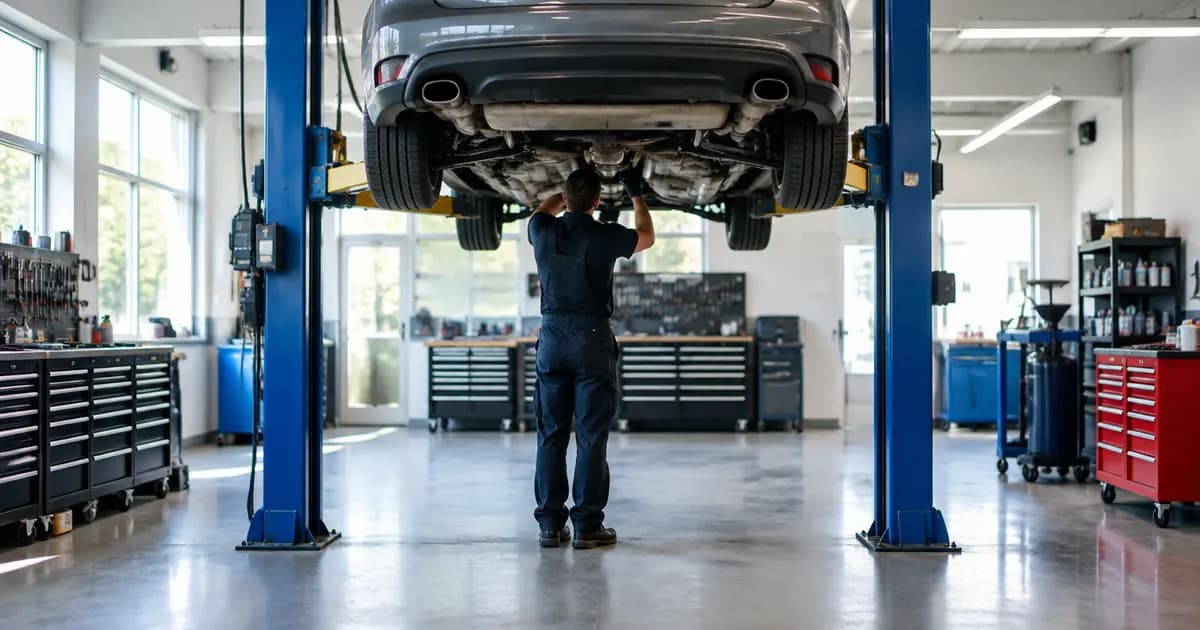
To start a mechanic shop, register the business, check whether your state or country licenses repair businesses, set up premises that meet waste and safety rules, equip for the work you will actually do, set a labour rate from your real costs, and use repair orders with written authorisation from the first customer. The order matters less than getting each one right before the doors open.
This guide covers the business side. The technical skill, and any trade qualification your country requires, are assumed.
1. Decide what kind of shop
Model | What it is | Trade-offs |
|---|---|---|
General repair | Servicing, brakes, suspension, diagnostics for most makes | Broad demand; more equipment and more competition |
Specialist | One make, or one system such as transmissions or electrics | Higher rates; narrower market, often further travel for customers |
Mobile mechanic | Servicing and repairs at the customer’s home or workplace | Low premises cost; limits on heavy jobs and lifts |
Fleet work | Servicing vehicles for local businesses | Steady volume; pressure on price and turnaround |
2. Register the business
Register the business the way your country requires: in the US, the SBA’s guide to launching a business covers structure, registration and tax IDs; in the UK, register as a sole trader or form a company; in Australia, apply for an ABN. Keep the business’s money in its own account from day one.
3. Check whether repair businesses are licensed where you are
Some places license the repair business itself, separately from any qualification the mechanic holds. Two examples:
- California licenses automotive repair dealers through its Bureau of Automotive Repair.
- New South Wales: Service NSW states that if you are a self-employed motor vehicle repairer, or run a motor vehicle repair business in NSW, you must have a motor vehicle repairer licence.
Other US states, Australian states and countries have their own rules, and some specialist work, such as vehicle safety inspections or emissions testing, needs separate approval. Check with your local regulator before you trade.
4. Plan for waste and safety
A workshop produces used oil, filters, coolant, batteries and solvents. In the US, EPA’s used oil management standards include labelling all containers and tanks “Used Oil”, keeping them in good condition, taking steps to prevent leaks and spills, and recycling used oil rather than dumping it. In England, GOV.UK lists oils, except edible ones, such as car oil as examples of hazardous waste, with duties for how it is stored and collected. Arrange a licensed collector before you open, and keep the records.
Safety planning covers lifts and jacks, pits, fumes, compressed air and fire. A written risk assessment for the workshop is a sensible first document even where it is not strictly required.
5. Equip for the work you will do
Buy for the jobs you expect in the first year, not for every job that exists. A typical first list: a vehicle lift or two, a diagnostic scan tool with the software subscriptions it needs, hand and air tools, an air compressor, oil drainage and storage, a parts washer, and safety equipment. Lease or finance big items only when the work to pay for them is already coming in.
6. Set your labour rate from your costs
Your labour rate has to cover wages, on-costs, rent, equipment, software, insurance and the hours nobody pays for: road tests, waiting for parts, quoting. Spread those costs over the hours you can realistically bill and add your margin; the hourly rate calculator does the arithmetic. Then decide how you will price parts, whether at a markup or from a price list, and use the markup calculator to keep margins straight.
7. Paperwork from the first customer
- A repair order for every vehicle, with the customer’s concern in their words.
- A written estimate and recorded authorisation before any work beyond diagnosis.
- An invoice that lists parts and labour separately.
- A record of recommended work the customer declined.
- Insurance arranged with an insurer or broker who covers garages: ask specifically about customers’ vehicles in your care.
8. Put the systems in before the first booking
- Bookings: a diary everyone can see, with realistic time per job and space for walk-ins.
- Parts: accounts with two or three suppliers, and a clear way to order parts against a repair order.
- Stock: the fast-moving items you keep on the shelf, such as filters, oils and bulbs, and a minimum level for each.
- Service history: every vehicle’s previous work, so the next technician knows what was done and when.
- Reminders: a message when a service is due, which is how a workshop fills its diary without advertising.
None of these is complicated on its own. The trouble comes when they live in five different places and nobody can find the last invoice for a car that is back on the lift.
9. Get the first customers
Most new shops fill from the local area: a claimed business listing on the maps customers use, reviews from the first customers, and relationships with nearby businesses that run vehicles. Answer the phone, give a clear price, and send a reminder when the next service is due; a returning customer costs far less to win than a new one.
Running the shop in Primemgr
Primemgr’s automotive pack turns jobs into repair orders with vehicle fields, adds workshop checklists, and keeps each vehicle’s service history so the next service reminder goes out on time. Quotes are approved on the customer’s phone, which records who authorised what and when. You can try it free for 14 days on your own jobs: see pricing.
Official guidance
- Automotive service technicians and mechanics (U.S. Bureau of Labor Statistics)
- Getting an MOT (GOV.UK)