How to price cleaning services: hourly, flat rate and per area, with the maths
Every cleaning price starts from what an hour has to earn. The formula, three ways to turn it into prices customers understand, and a worked example.
By Primemgr TeamHow we research and check this
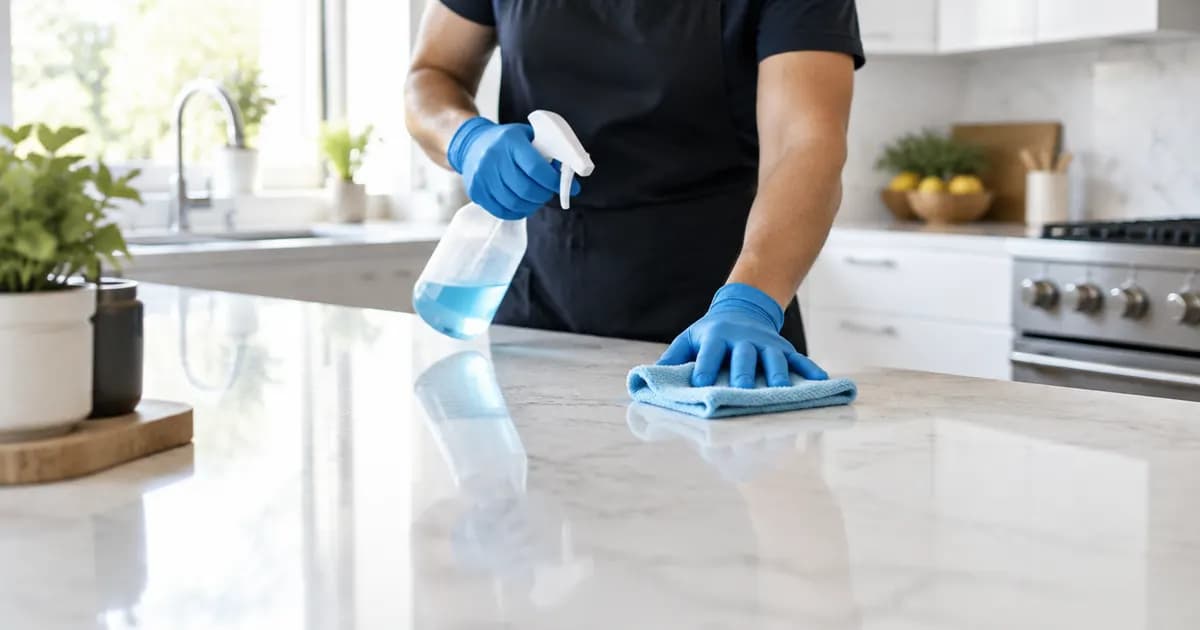
Price cleaning by working out what one hour of cleaning costs you, adding your margin, and then turning that hourly figure into whichever price customers find easiest: per hour, a flat rate per visit, or a rate per square metre or square foot. The going rate in your area tells you whether customers will pay it; it does not tell you whether you make money at it. Once the price is set, write it up with the cleaning estimate template.
Step 1: the true cost of an hour
An hour of cleaning costs more than the cleaner’s wage. Add up, per hour actually spent cleaning:
- Wages and on-costs: pay, plus payroll taxes, pension or superannuation, and workers’ compensation or employer’s insurance.
- Unpaid time: travel between jobs, setting up and packing away. If a cleaner is paid for 8 hours and cleans for 6.5, each cleaning hour carries the cost of 1.23 paid hours.
- Supplies: products, cloths, vacuum bags and equipment wear, per hour.
- Overheads: insurance, phone, software, vehicle, advertising, divided by the cleaning hours in a month.
Step 2: add your margin
Price = cost per hour ÷ (1 − target margin). With a cost of $35 an hour and a target margin of 30%, the price is $35 ÷ 0.7 = $50 an hour. Adding 30% to cost instead ($45.50) gives a margin of only 23%; the difference is explained in markup vs margin, and the margin calculator checks it.
Step 3: choose how to present the price
Method | How it works | Good for | Watch out for |
|---|---|---|---|
Hourly | Rate × hours worked | New customers, unpredictable jobs | Customers worry about the total |
Flat rate per visit | Estimated hours × rate, quoted as one figure | Regular cleans of the same home | Homes that take longer than planned |
Per room / by home size | A price per bedroom and bathroom | Online quoting, end-of-lease | Condition varies more than size |
Per area | Rate per square metre or square foot | Commercial and office cleaning | Needs accurate measurements |
A worked example
A regular fortnightly clean of a three-bedroom, two-bathroom home takes one cleaner about 3 hours once the home is on a routine. At $50 an hour, that is a flat $150 a visit. The first clean usually takes longer, so quote it separately as a one-off: 4.5 hours, $225. If the home is consistently taking 3.5 hours after the first month, the price is wrong and should be revised with notice, not absorbed.
Things that should change the price
- Condition: a first clean, a home not cleaned for months, or heavy build-up.
- Pets, particularly shedding and litter areas.
- Extras: inside the oven, inside the fridge, interior windows, walls, balconies.
- Access: stairs without a lift, parking, long walks from the van.
- Frequency: weekly visits take less time each than monthly ones, so a lower per-visit price can still pay better.
- Out-of-hours or short-notice work.
Common pricing mistakes
- Copying a competitor’s price without knowing their costs or yours.
- Leaving travel time out of the cost of an hour.
- Never raising prices on long-standing customers while wages and supplies go up.
- Pricing the first clean like a regular one.
- Offering discounts that are not tied to anything, such as a lower price for weekly rather than fortnightly visits.
Tools and next steps
The house cleaning price calculator prices any home from your own timings per room and your hourly rate, using the same method as the example above. The service pricing calculator turns your costs and margin into a price, and the hourly rate calculator works out the cost of an hour. If you are just starting, read how to start a cleaning business first. In Primemgr, your prices live in a price list used on every quote, and the job profitability report compares what each job billed with the cost of the items billed, with the hours logged shown beside it.
Official guidance
- Janitors and building cleaners (U.S. Bureau of Labor Statistics)
- Health and safety made simple (HSE (UK))