How to start a cleaning business: the first ten decisions
Starting a cleaning business is mostly ten decisions made in the right order: what you clean, how you register, what you charge, and how the first customers find you.
By Primemgr TeamHow we research and check this
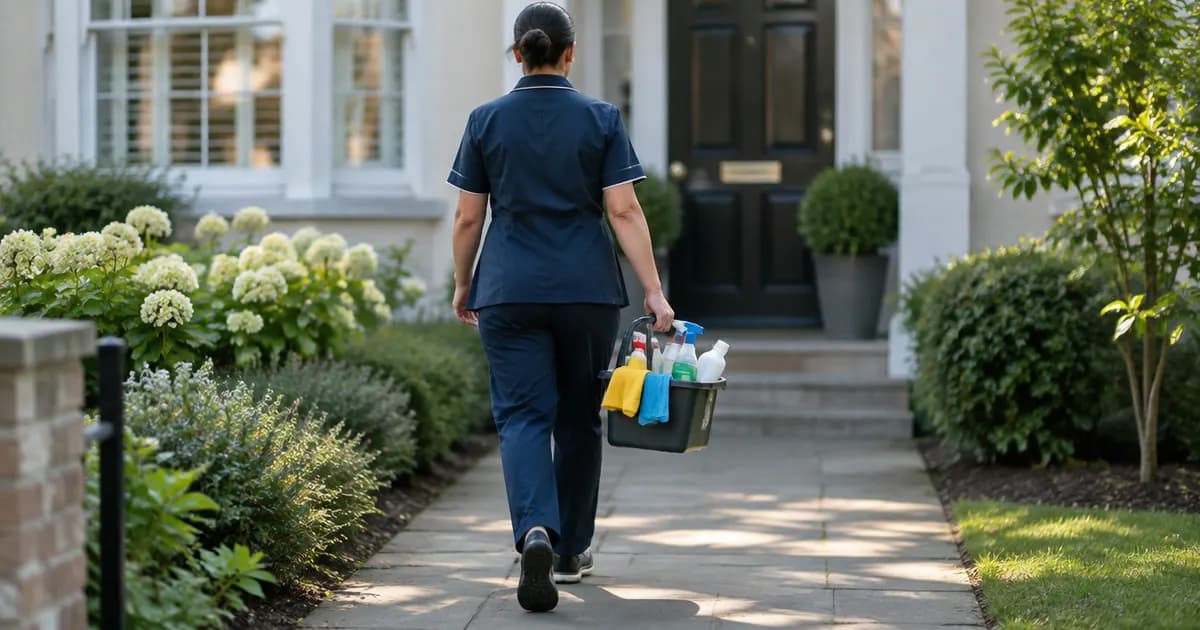
To start a cleaning business, decide what kind of cleaning you will do, register the business, get insurance, set prices that cover your time and costs, buy a starter kit of supplies, and win a first handful of regular customers. The order matters: the kind of cleaning decides your prices, your equipment and where your customers come from.
1. Choose what you clean
Type | What the work is like | How it is usually priced |
|---|---|---|
Regular residential | Weekly or fortnightly visits to the same homes | Per hour or a flat rate per visit |
One-off deep cleans | Longer, more detailed, less predictable | Flat rate from a quote |
End-of-lease / move-out | Deadline-driven, checked against a list | Flat rate by property size |
Commercial / office | After hours, contracts, larger areas | Per visit or per month on a contract |
Specialist (carpets, windows, pressure washing) | Equipment-heavy | Per room, per window or per area |
Regular residential cleaning is the most common start: low equipment cost and recurring income. Commercial work pays in larger contracts but usually needs a track record, insurance certificates and staff who can work evenings.
2. Register the business
How you register depends on where you are. In the US, the SBA explains how to choose a structure and register in your state. In the UK, GOV.UK explains when you must register as a sole trader. In Australia, you will usually register for an ABN, which is free. Check whether your city or council needs a business licence as well.
3. Get insurance
Public liability insurance covers damage or injury you cause in a customer’s home or premises. Commercial customers will ask for a certificate before you start. If you hold customers’ keys, ask your insurer about key cover. Once you employ anyone, workers’ compensation or employer’s liability insurance usually becomes compulsory; check the rule where you work.
4. Work out your prices
Start from what an hour of your time has to earn (the method is in how to price cleaning services): your wage, plus insurance, supplies, travel and phone, plus a profit margin. Then decide whether to charge by the hour or a flat rate per visit. The service pricing calculator turns your costs and margin into a price, and the labour rate calculator works out what an hour costs you.
5. Buy a starter kit
- A good vacuum with attachments, a mop system, microfibre cloths (colour-coded by area), scrubbing brushes, a squeegee.
- Products: a neutral all-purpose cleaner, a bathroom descaler, a degreaser, glass cleaner and a disinfectant for high-touch surfaces.
- Gloves and any protection the product labels call for. In the UK, HSE’s COSHH guidance for cleaners covers storing and using cleaning products safely.
- A caddy per cleaner, so every visit starts with the same kit.
6. Write your checklists
A written checklist per job type is what lets a customer trust a new cleaner and what lets you hire. Our house cleaning checklist is a starting point. Start with one for a standard clean and one for a deep clean, room by room.
7. Decide your policies before the first booking
- Cancellation and lockout: what happens if the customer cancels late or you cannot get in.
- Keys and alarm codes: how they are stored and returned.
- Breakages: how you report them and what your insurance covers.
- Payment: when you are paid and how.
- Write them down; the booking cancellation policy guide has sample wording.
8. Find the first customers
- Friends, family and neighbours, asked directly, with a first-clean offer.
- A Google Business Profile with photos and your service area.
- Local community groups and noticeboards.
- Real estate agents and property managers, for end-of-lease work.
- Asking every happy customer for a review and a referral.
9. Set up a simple system
From the first customer you need to know who is booked when, what each home needs (access, pets, products), what was done and what is unpaid. A calendar and a notebook work for a few customers; past ten regular clients, cleaning business software saves hours a week.
10. Plan the first hire
Hire when you are turning work away, not before. Your checklists become the training, and recurring customers become the steady hours that let you offer someone regular work.
Running it with Primemgr
The Primemgr cleaning pack sets up jobs with access notes, pets and equipment fields; a room-by-room cleaning checklist filled in on a phone; statuses from booked to quality check to done; and service agreements that book each regular clean on its own. See cleaning services.
Official guidance
- Janitors and building cleaners (U.S. Bureau of Labor Statistics)
- Health and safety made simple (HSE (UK))
This article is general information, not legal, tax, accounting, employment or regulatory advice. Rules differ by country, state and situation and change over time: check the official source linked above for where you work, and ask a qualified adviser before relying on it for a decision.